Managing cash flow in manufacturing: turning unpaid invoices into opportunity
Manufacturers can often face a gap in timing between paying suppliers for raw materials and receiving payments from customers for finished goods. Invoice Finance helps in closing that gap by advancing up to 85% of invoice value once it’s been sent to the customer for finished goods. This helps to improve working capital without relying on traditional loans or property security.
Manufacturing runs on precision. Tight deadlines, complex supply chains and constant pressure on working capital. This shapes every decision businesses make. Every machine, every pallet of raw materials, every shipment relies on cash landing in the right place at the right time.
But for many manufacturers, the biggest challenge with keeping production on track is cash flow.
Order books can be full, production lines active, and customer demand strong, yet delayed customer payments can still slow growth and create financial strain.
The good news is unpaid invoices don’t have to sit idle. With the right working capital solution, outstanding customer invoices can become a source of liquidity that helps manufacturers maintain momentum.
Why cash flow pressure is increasing in manufacturing
Cash flow pressure continues to challenge Australian manufacturers as rising operating costs, supply chain disruptions and extended customer payment terms place increasing strain on working capital.
According to the Australian Small Business and Family Enterprise Ombudsman (ASBFEO), late payments continue to impact small and medium-sized businesses across Australia, creating significant pressure on day-to-day operations and business growth.
For manufacturers, long debtor cycles can create a substantial gap between paying suppliers and receiving customer payment, particularly when large customers operate on extended trading terms.
This can leave businesses needing to fund:
- Raw materials and inventory
- Wages and production costs
- Freight and logistics
- Equipment maintenance
- Supplier payments
Even profitable manufacturers can experience cash flow constraints when capital remains tied up in unpaid invoices for extended periods.
How to turn receivables into working capital
There are funding options out there designed specifically to help manufacturers unlock cash tied up in invoices. Instead of waiting months for payment, you can access most of an invoice’s value within 72 hours.
Here’s how it works:
- You invoice your customer after delivering the goods or completing the order.
- A finance provider advances up to 85% of that invoice amount straight away.
- Once your customer pays, the remaining balance (minus a small fee) is released to you.
The real advantage? You’re no longer stuck waiting on someone else’s payment cycle. The money you’ve already earned is put back into your business almost instantly, helping you buy materials, pay staff, and take on new orders without hesitation.
For manufacturers, that kind of cash flow can make all the difference between keeping momentum and falling behind.
Invoice Finance vs Traditional Funding Options for Manufacturers
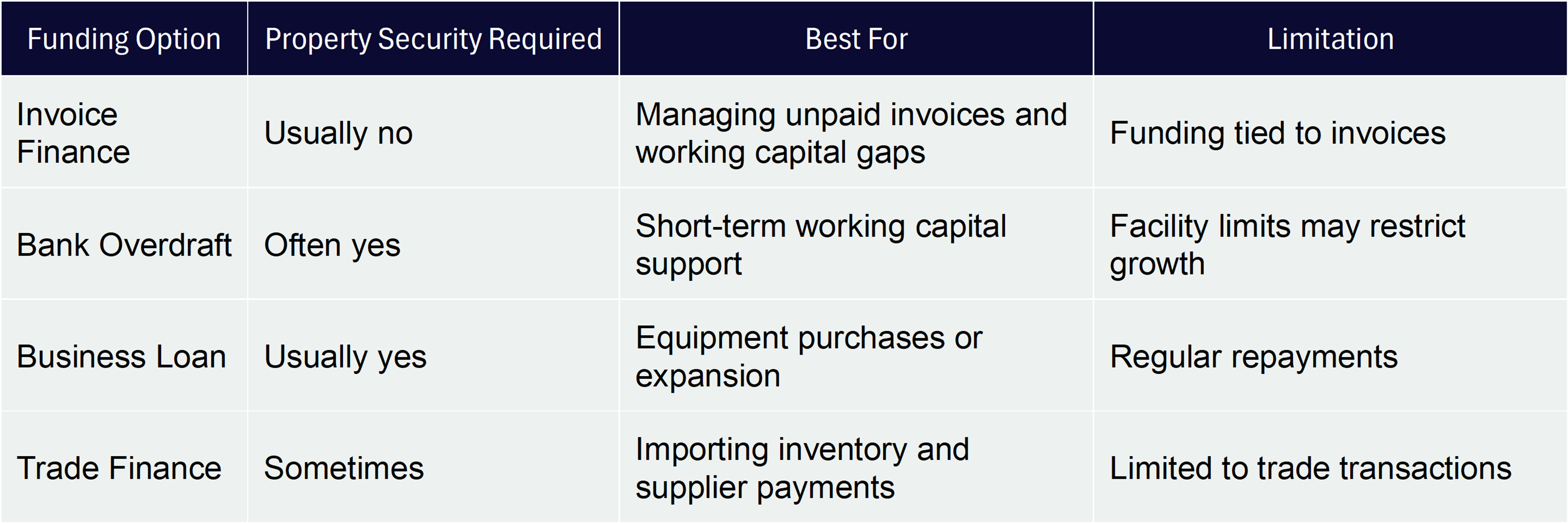
Why this type of funding works so well for manufacturers
Manufacturing is naturally suited to invoice finance because it thrives on steady orders, repeat customers and ongoing invoicing. Here’s why it fits:
-
It smooths out long payment terms
Big corporates, wholesalers and retailers often demand 60 - 90-day terms. Invoice finance bridges that gap so your cash keeps moving, even when payments don’t.
-
It supports large-scale purchasing
Buying raw materials in bulk requires significant upfront capital. Freeing up cash in receivables means you can take advantage of supplier discounts or seasonal price drops.
-
It fuels growth without adding debt
Invoice finance isn’t a loan. There are no long-term repayments. Just faster access to the money you’ve already earned.
-
It scales naturally with your business
The more you invoice, the more working capital becomes available. As production grows, your funding capacity grows too.
Using stronger cash flow to strengthen supplier relationships
Trust is everything in a manufacturing supply chain. Paying suppliers on time or even early, can build a reputation for reliability and often opens the door to better pricing, faster delivery and priority stock.
Invoice finance helps you stay consistent with supplier payments, even when your own customers are slow to pay. For some owners, having this certainty allows them to negotiate competitive pricing through early payments and secure long-term advantages.
Benefits of Invoice Finance for manufacturers
Improved working capital
Manufacturers can access funds tied up in unpaid invoices sooner, helping maintain smoother day-to-day operations.
Faster access to cash flow
Accessing cash whenever it’s needed can help businesses cover wages, supplier payments and operational costs without waiting for customers to pay.
Funding that scales with sales
As invoice volume increases, available funding can grow alongside the business.
No property security required
In many cases, Invoice Finance relies on outstanding invoices rather than residential or commercial property security.
Supports production continuity
Consistent working capital can help manufacturers avoid production delays caused by cash flow shortages.
Fuelling growth and innovation
Limitations in cash don’t just slow production, they slow innovation. Many manufacturers want to upgrade machinery, invest in new product lines or expand into new markets, but they can’t access cash quickly enough to take advantage of these opportunities.
With more flexible access to working capital, you can fund growth using your own revenue rather than taking on additional debt.
When a loan still makes sense
Traditional loans still have their place. If you’re investing in major equipment, expanding your facility, or purchasing long-term assets like vehicles or property, a business loan can be a strong option, as long as your cash flow can comfortably support the repayments.
But for everyday working capital needs, materials, wages, production costs or managing slow-paying customers, invoice finance is often the more flexible, sustainable choice. It gives you access to cash when you need it, without waiting on lengthy approval processes or customer timelines.
Why manufacturers choose Earlypay
Manufacturers often operate with high upfront costs and extended customer payment terms. Access to flexible working capital can help reduce operational pressure and support growth.
With Earlypay, manufacturers can benefit from:
- Access up to 85% of invoice value upfront
- Integration with Xero and MYOB
- No residential property security required in many cases
- Facilities that scale alongside invoice volume
- Experience supporting Australian manufacturing businesses
Rather than relying solely on traditional lending structures, Invoice Finance provides funding linked directly to business activity and outstanding invoices.
Frequently asked questions about Invoice Finance for manufacturers
How does Invoice Finance work for manufacturers?
Invoice Finance allows manufacturers to unlock working capital tied up in unpaid invoices. Once an invoice is issued to a customer, a percentage of its value can be advanced before payment is received.
What advance rate can manufacturers expect?
Many invoice finance providers offer advances of up to 85% of invoice value, depending on the business and customer profile.
Do manufacturers need property as security?
In many cases, no. Invoice Finance is generally secured against outstanding invoices rather than residential or commercial property.
How quickly can manufacturers access funds?
Depending on onboarding and approval requirements, funding may be available within 48 hours after approved invoices are submitted. Once an Invoice Finance facility is set up, funds can be drawn down as soon as you’ve sent an invoice to your customer!
Is Invoice Finance suitable for growing manufacturers?
It can be suitable for manufacturers experiencing growth, seasonal demand or extended customer payment terms that create pressure on working capital.